There is something about the AI moment that reminds me a lot of when the internet was new. A lot of what was imagined and promised about the internet was never realized. But much was.
I’ve been reading Ellen Ullman’s memoirs - “Life in Code” and “Close to the Machine” - and her observations about proximity to technology feel relevant here. Being close to the machine means understanding its actual capabilities and limitations apart from the prevailing sales narratives. It also means a kind of loneliness, because you are working in a space that others don’t yet see clearly or fully understand.
I suspect people thinking seriously about AI right now will experience something similar: a stretch of hostility and discomfort while the rest of the world catches up and the consumer market level-sets on the promises being made. In the interim, the hype will not match the reality, and the reality will sometimes exceed the hype in ways no one predicted. And for a while, how it works and why it matters won’t be legible to everyone at once.
The move from a structuralist account in which capital is understood to structure social relations in relatively homologous ways to a view of hegemony in which power relations are subject to repetition, convergence, and rearticulation brought the question of temporality into the thinking of structure, and marked a shift from a form of Althusserian theory that takes structural totalities as theoretical objects to one in which the insights into the contingent possibility of structure inaugurate a renewed conception of hegemony as bound up with the contingent sites and strategies of the rearticulation of power.
This was my era in college, and I remember feeling challenged and overwhelmed as an undergrad trying to read theory for the first time. So today, I asked Claude.ai to put it in plain language, just to see what would happen. Here’s the after:
Scholars used to think that capitalism shaped society in consistent, predictable patterns. But newer thinking focuses on how power works—how it repeats, overlaps, and gets reshaped over time. This brought time into the picture and moved away from older theories that treated social structures as fixed. Instead, recognizing that structures can change opened up a new way of understanding power: it's tied to specific moments and strategies, and it's always being renegotiated.
If you spend time around cycling and pedestrian advocates, the debate between bans and regulations is familiar territory. When I got deep into road biking, where I learned to ride long distance through a red state with almost no bike infrastructure outside tight urban and exurban areas, one of the best things I did was take road classes through the League of American Bicyclists. You learn the rules of the road from a cyclist’s perspective and practice skills like riding with car traffic under expert guidance, including how to change a flat on the side of the road in the height of summer, gritty with sweat and road grime.
The challenge is that bike education isn’t standardized, so most cyclists never learn the fundamentals anyway. Many of us learned as kids and haven’t had a refresh since. I get stomach pain when I see people riding at night without a light, going too fast on a dedicated path, and adults riding their bike on a pedestrian sidewalk. But when I think about e-bike bans and pedestrian right-of-way debates, it strikes me that outside of getting a driver’s permit for car drivers, there’s essentially no infrastructure for learning how to share roads and paths safely. We’re trying to regulate behavior most of us didn’t learn in earnest.
“In short, decades of research have demonstrated that our political beliefs and behavior are thoroughly motivated and mediated by our social identities: i.e., the many cross-cutting social groupings we feel affinity with. And as long as we do not account for this profound and pervasive dependence, our attempts to address the epistemic failures threatening contemporary democracies will inevitably fall short. More than any particular institutional, technological, or educational reform, promoting a healthier democracy requires reshaping the social identity landscape that ultimately anchors other democratic pathologies.”
As always, this drives me back to Haraway’s cyborg, a useful metaphor for thinking about our political, environmental and social tangle and how it butts up against emerging tech and science. (In Haraway’s context, it was the rise of STEM as a driving force in academia at the dawn of the computer age.) Bagg’s argument lands in familiar territory for anyone who’s wrestled with the cyborg metaphor. Both reject the assumption that better information alone will save us from ourselves, whether from context collapse or the dualisms (binaries, heh) that structure how we think about technology, nature, humanity and politics.
Bagg arrives at something parallel from political science: We trust information that affirms the groups we belong to.
Business and marketing, for what it’s worth, tell us the same thing from a slightly different angle: you’re most likely to convert on a recommendation from a trusted friend.
The next best thing in our current digital media landscape: a trusted influencer you identify with, which is why TikTok increasingly feels like QVC.
The problem isn’t that people lack access to truth, it’s that they’ve lost affinity with the experts, institutions and collaborative practices that produce real expertise. We’re arguably in era so thick with marketing that we are locked into performing respectability and purity aesthetics as our primary approach to the world and one another, instead of prioritizing social health and good function.
Both perspectives point toward the same conclusion: you have to recognize shared affinities through the slow work of creating conditions where people want to trust each other across differences.
I suspect these three trends are connected: Women reportedly use AI at significantly lower rates than men—25 percent lower on average—in part because they’re more concerned about ethics, including privacy, consent and intellectual property. At the same time, countries with more positive social media experiences tend to be more open to AI, while Americans’ distrust is shaped by years of watching tech platforms erode trust. Meanwhile, one of the largest social platforms has turned its AI chatbot into a harassment tool—generating roughly one nonconsensual sexualized deepfake image per minute, disproportionately targeting women and girls.
Determined to finish at least one more novel this year, and this one fits the bill. Currently reading: Moderation by Elaine Castillo 📚
This book isn’t in Epilogue so I can’t log it properly, but it’s an okay primer on change communication. For higher ed, the emphasis on engaging leadership and governance is handy. 📚
“… every text is connected to other texts by citations, quotations, allusions, borrowings, adaptations, appropriations, parody, pastiche, imitation, and the like. Every text is in a dialogical relationship with other texts. In sum, intertextuality describes the relationships that exist between and among texts. What follows is a discussion of the strategies of intertextuality.”
I met a friend for dinner, we had a time, and as she left she mentioned her long-time book club and how much everyone hated their latest read. What was it? I asked. She said, “Have you heard of ‘The Heart in Winter’?” 😭
Very much enjoying the Netflix series “Dark Winds,” based on the series of novels by Tony Hillerman. Not only does the storytelling slap, but it’s visually beautiful, with sweeping Southwest vistas and a fleet of classic vehicles that look so good in widescreen.
RIP D’Angelo. And a good occasion to reread this excellent 2012 profile discussing fame, religion, and how his status as a sex symbol in his youth negatively impacted D’Angelo’s self-esteem - and ultimately his career.
“In 2024, there were a total of 454 words used excessively by chatbots, the researchers report.” When does use of AI tip over into something fraudulent? Experts disagree.
The education sector is a big target for cyber attacks, with higher ed being one of the largest and most sensitive targets for bad actors. A recent study shows that education is unprepared as a sector and many institutions lack resources to support a thoughtful and robust cybersecurity program.
Of course Jean Grae has a striking narrative voice and point of view. My hero. Currently reading: In My Remaining Years by Jean Grae 📚
This book has some decent insights, especially on how to refine your leadership “brand” in the workplace and online, but I’m not sold yet. Currently reading: When We’re in Charge by Amanda Litman 📚
Vonnegut captures today’s tech zeitgeist in a science fiction tale - written seventy years ago. Apparently he wrote it during his time at GE, inspired by their rush to automation. Finished reading: Player Piano by Kurt Vonnegut 📚
Wherein the protagonist turns a blob into the man of her dreams. Currently reading: Blob by Maggie Su 📚
Currently reading: Player Piano by Kurt Vonnegut 📚
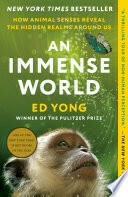
Needed this vibe. Currently reading: An Immense World by Ed Yong 📚
The bureau speak is v amusing. Currently reading: The Ministry of Time by Kaliane Bradley 📚
Finished reading: Thick by Tressie McMillan Cottom 📚